
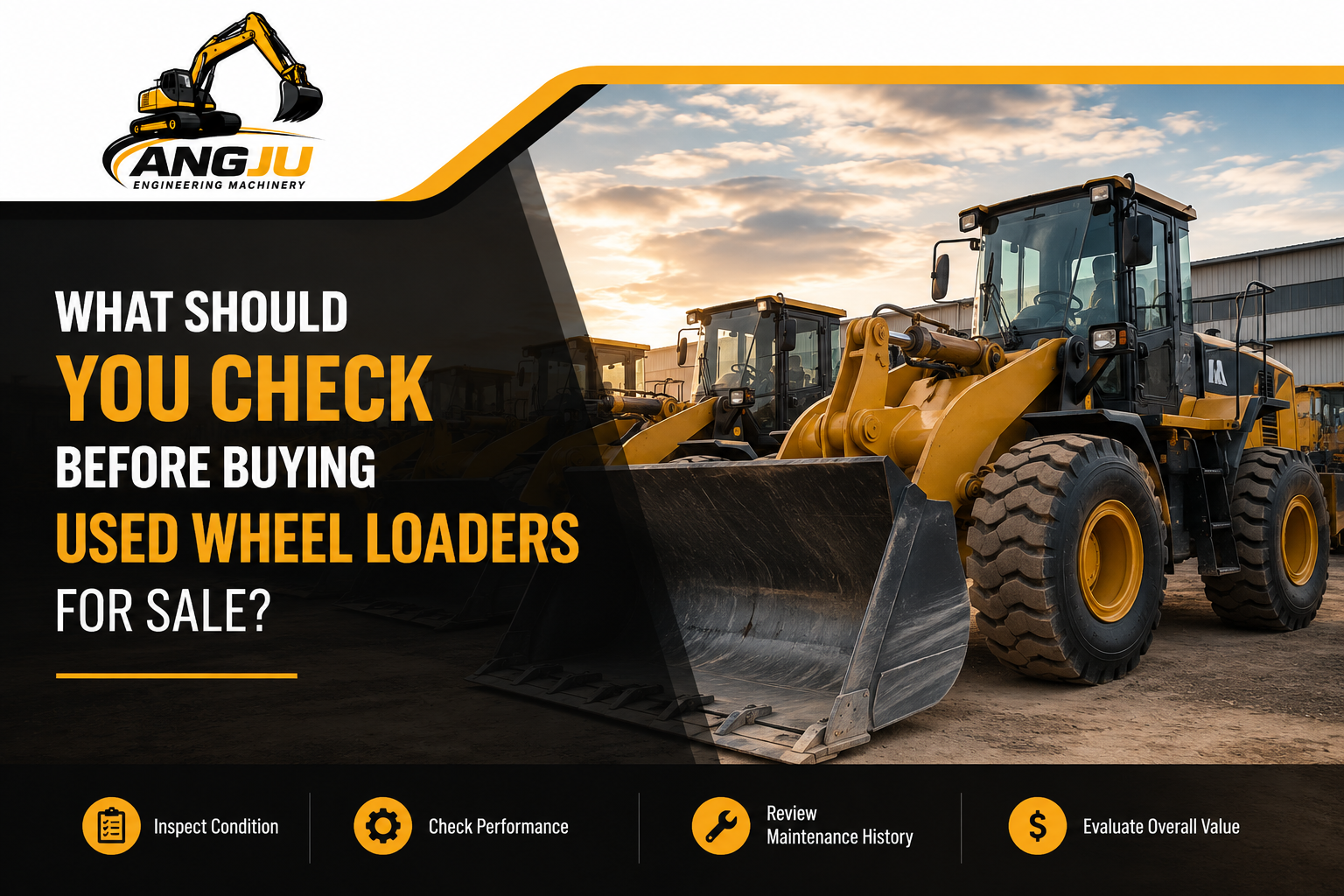
Buying used construction equipment can save businesses a significant amount of money, especially when the machine is still in excellent working condition. Among the most in demand machines in construction, mining, agriculture, and material handling industries are wheel loaders. However, purchasing a used wheel loader without proper inspection can quickly turn a good deal into an expensive mistake.
If you are searching for reliable Used Wheel Loaders for Sale, it is important to understand exactly what to inspect before making your final decision. From engine performance to hydraulic systems and maintenance records, every detail matters.
At Angju Machinery Co,.Ltd., customers can find high quality used heavy equipment that is carefully inspected for performance and reliability. This guide explains the most important things buyers should check before purchasing a used wheel loader.
Why Buying a Used Wheel Loader Makes Sense
Many contractors and business owners prefer used wheel loaders because they offer excellent value for money. A well maintained machine can deliver years of dependable service at a much lower cost compared to buying brand new equipment.
Benefits of buying used wheel loaders include:
- Lower upfront investment
- Faster equipment availability
- Reduced depreciation costs
- Access to premium brands at affordable prices
- Better return on investment for small and medium businesses
However, the key to success is buying from a trusted supplier and thoroughly inspecting the machine before purchase.
Understand Your Work Requirements First
Before inspecting any machine, determine your operational needs. Different wheel loaders are designed for different applications.
Ask yourself:
- What materials will the loader handle?
- How many operating hours will it work daily?
- What bucket capacity is required?
- Will the machine operate on rough terrain?
- Do you need additional attachments?
Choosing the correct loader size and specifications helps avoid overspending or purchasing underpowered equipment. Experts recommend selecting a machine based on actual project requirements instead of simply buying the largest available option.
Inspect the Overall Machine Condition
The first inspection should always begin with a complete visual walk around of the wheel loader.
Check for:
- Cracks in the frame
- Rust and corrosion
- Weld repairs
- Bent metal parts
- Damaged panels
- Broken lights or glass
- Signs of accidents or poor maintenance
Heavy structural repairs often indicate that the machine experienced excessive stress or harsh operating conditions in the past. Visible damage may also lead to future operational problems.
A clean and well maintained machine usually reflects responsible ownership and regular servicing.
Examine the Engine Carefully
The engine is the heart of any wheel loader. Engine repairs can be extremely expensive, so a detailed inspection is essential.
Key engine checks include:
- Cold start performance
- Excessive smoke from exhaust
- Oil leaks
- Unusual engine noise
- Rough idling
- Overheating signs
- Fluid levels and condition
The engine should start smoothly without extended cranking. Black, blue, or white smoke may indicate internal engine issues or fuel system problems.
Also inspect:
- Belts and hoses
- Air filters
- Cooling system
- Radiator condition
- Oil contamination
Any signs of neglected maintenance should be treated as warning signs.
Check the Hour Meter and Service History
Operating hours are important when evaluating used wheel loaders, but hours alone do not tell the complete story.
A machine with lower hours may still be heavily worn if it was poorly maintained or operated aggressively. Industry experts recommend comparing the machine’s physical condition with the displayed hours.
Ask the seller for:
- Maintenance records
- Repair invoices
- Inspection reports
- Ownership history
- Daily inspection logs
Complete service records demonstrate that the machine received proper care throughout its working life.
Inspect the Hydraulic System
Hydraulic systems control lifting, steering, and bucket movement. Poor hydraulic performance directly affects productivity and safety.
What to inspect:
- Hydraulic hoses
- Cylinders
- Seals
- Pumps
- Control valves
- Hydraulic fluid leaks
Operate the boom and bucket through their full range of motion. Movements should feel smooth and responsive without jerking or hesitation.
Watch for:
- Weak lifting power
- Slow response
- Hydraulic drift
- Excessive noise
- Oil leaks around cylinders
Even small hydraulic problems can become costly repairs later.
Pay Attention to the Articulation Joint
One of the most critical areas on a wheel loader is the articulation joint located in the center of the machine.
This joint handles constant stress during steering and operation. Excessive wear here can lead to expensive repairs and unsafe operation.
Look for:
- Excessive movement or play
- Cracks around pivot points
- Loose pins and bushings
- Poor lubrication
- Knocking sounds during steering
Industry professionals often identify articulation wear as one of the biggest hidden expenses in used wheel loaders.
Turn the steering fully left and right while observing the joint carefully.
Evaluate the Transmission and Drivetrain
Transmission and drivetrain repairs can be extremely costly, making this inspection step essential.
During operation:
- Test all gears
- Drive forward and reverse
- Check acceleration response
- Listen for grinding noises
- Feel for vibrations
- Watch for delayed shifting
The loader should move smoothly without hesitation or jerking.
Also inspect:
- Axles
- Drive shafts
- Differential components
- Transmission oil condition
Leaks or unusual sounds may signal internal wear.
Inspect Tires Thoroughly
Tires provide valuable clues about how the wheel loader was previously used and maintained.
Check for:
- Uneven tire wear
- Sidewall damage
- Deep cuts
- Cracks
- Bald spots
- Incorrect tire pressure
Uneven tire wear may indicate alignment problems or articulation joint issues.
Replacing large wheel loader tires can be expensive, so tire condition should influence the final purchase price.
Examine the Bucket and Attachments
The bucket is one of the hardest working parts of any wheel loader.
Inspect:
- Bucket cutting edges
- Teeth wear
- Side plates
- Bottom wear plates
- Cracks and welds
- Quick coupler condition
Severe bucket wear may indicate the machine handled abrasive materials or experienced heavy usage.
If attachments are included, test them fully and confirm compatibility with future job requirements.
Test the Loader Under Real Working Conditions
A proper test drive is one of the most important steps before buying.
Operate the wheel loader under realistic conditions whenever possible.
During testing:
- Lift a load
- Turn sharply
- Brake suddenly
- Drive uphill
- Test hydraulic responsiveness
- Observe dashboard warning lights
The machine should feel stable, powerful, and responsive throughout operation.
Never purchase heavy equipment without operating it first.
Look for Leaks Everywhere
Leaks are often clear signs of neglected maintenance or worn components.
Inspect carefully for:
- Hydraulic oil leaks
- Engine oil leaks
- Transmission fluid leaks
- Coolant leaks
- Fuel leaks
Look underneath the machine after operation to identify fresh drips or fluid accumulation.
Even minor leaks can signal major future repairs.
Check the Operator Cabin
A comfortable and functional cabin improves operator productivity and safety.
Inspect:
- Seat condition
- Control functions
- Air conditioning
- Heating system
- Dashboard gauges
- Safety features
- Visibility
Worn controls or damaged interiors may also reflect overall machine neglect.
Verify Parts Availability
Before purchasing any used wheel loader, confirm the availability of spare parts and servicing support in your region.
Popular brands generally offer:
- Easier access to replacement parts
- Better resale value
- Faster maintenance support
- Lower downtime
Reliable suppliers such as Angju Machinery Co,.Ltd. help customers choose machines with strong long term support and dependable performance.
Consider a Professional Inspection
If you are unsure about evaluating heavy equipment yourself, hiring an independent inspection expert is highly recommended.
Professional inspectors can:
- Detect hidden mechanical issues
- Test hydraulic pressure
- Analyze oil samples
- Identify structural weaknesses
- Estimate repair costs
Many experienced equipment buyers strongly recommend third party inspections for higher value machinery purchases.
A small inspection fee can potentially save thousands of dollars in unexpected repairs.
Buy From a Trusted Supplier
One of the best ways to reduce risk is purchasing from a reputable supplier with industry experience.
A trusted dealer should provide:
- Transparent machine history
- Honest condition reports
- Inspection support
- Competitive pricing
- Export assistance if required
Angju Machinery Co,.Ltd. offers reliable used wheel loaders and heavy equipment solutions for businesses worldwide. Their focus on quality inspection and customer satisfaction helps buyers invest with confidence.
Common Mistakes Buyers Should Avoid
Many buyers make avoidable mistakes when purchasing used wheel loaders.
Common mistakes include:
- Focusing only on low price
- Ignoring service records
- Skipping the test drive
- Overlooking articulation wear
- Not checking hydraulic performance
- Buying from unknown sellers
- Failing to inspect tires properly
Careful evaluation always leads to better long term value.
Conclusion
Buying a used wheel loader can be an excellent investment when done correctly. A thorough inspection helps you avoid expensive repairs, downtime, and poor performance.
Before purchasing, always inspect:
- Engine condition
- Hydraulics
- Transmission
- Tires
- Articulation joint
- Bucket wear
- Maintenance history
Most importantly, purchase from a trusted supplier with experience in heavy equipment.
If you are looking for dependable Used Wheel Loaders for Sale, Angju Machinery Co,.Ltd. provides quality machines designed to deliver reliable performance and long term value for construction and industrial operations.
FAQs
1. How many hours is too much for a used wheel loader?
It depends on maintenance quality and machine type. Many well maintained wheel loaders can operate efficiently beyond 10,000 hours.
2. Why is the articulation joint important in wheel loaders?
The articulation joint controls steering and handles heavy stress. Excessive wear in this area can lead to costly repairs.
3. Should I buy a used wheel loader without service records?
It is risky. Service records help verify maintenance history and overall machine care.
4. What are the signs of hydraulic problems in used wheel loaders?
Slow operation, jerky movement, leaks, unusual noises, and weak lifting power are common warning signs.
5. Is a professional inspection worth the cost?
Yes. Independent inspections can identify hidden issues and help prevent expensive repair costs later.
6. How do I know if wheel loader tires are in good condition?
Check for even wear, cracks, cuts, sidewall damage, and proper inflation.
7. Why should I test drive a used wheel loader before buying?
A test drive helps identify transmission issues, hydraulic problems, steering performance, and unusual machine behavior.
8. Where can I find reliable Used Wheel Loaders for Sale?
You can explore high quality equipment options from Angju Machinery Co,.Ltd. for dependable used heavy machinery solutions.
Looking for reliable Used Wheel Loaders for Sale at competitive prices? Visit Angju Machinery Co,.Ltd. today and find high performance heavy equipment trusted by construction professionals worldwide.