
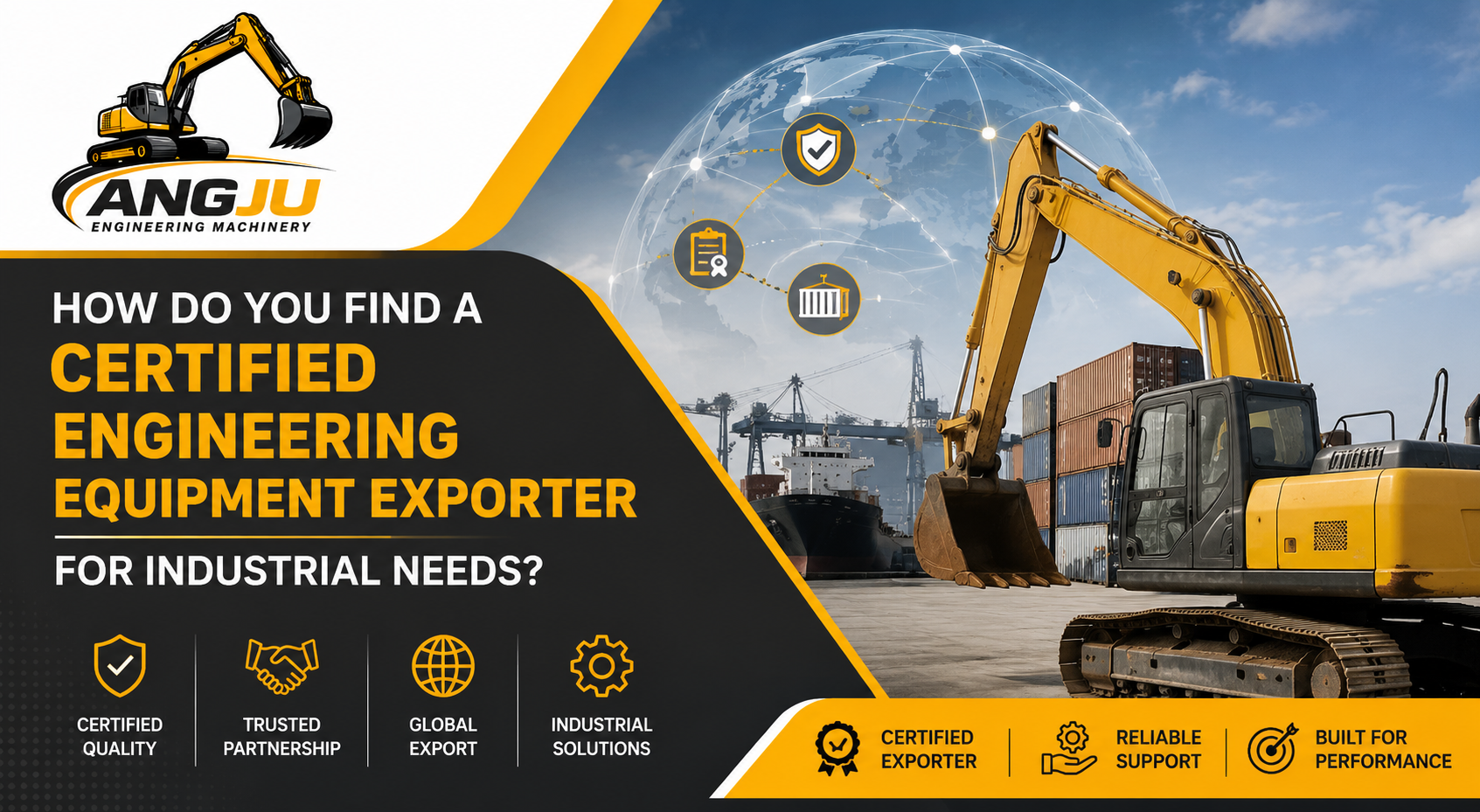
Industrial projects depend on reliable machinery, timely deliveries, and trustworthy suppliers. Whether you are expanding a construction fleet, upgrading mining equipment, or purchasing machinery for infrastructure development, choosing the right engineering equipment exporter is one of the most important decisions your business can make.
A certified engineering equipment exporter does more than supply machines. They help ensure product quality, compliance with international standards, transparent documentation, secure shipping, and dependable after sales support. Selecting the wrong exporter can lead to costly delays, unexpected maintenance expenses, and equipment that fails to meet your operational requirements.
This guide explains how to identify a certified engineering equipment exporter, what certifications matter, how to evaluate suppliers, and why partnering with an experienced company such as Angju Machinery Co., Ltd. can simplify international equipment sourcing. You can also explore their equipment range and services at angjumachinery.com.
Why Choosing the Right Engineering Equipment Exporter Matters
Engineering machinery represents a significant investment for construction companies, contractors, mining businesses, logistics firms, and industrial manufacturers. Buying from a reputable exporter reduces risks while ensuring long term value.
A professional exporter typically provides:
- High quality machinery
- Accurate inspection reports
- Transparent pricing
- Complete export documentation
- International shipping assistance
- Reliable customer support
- Technical guidance before purchase
These services help businesses avoid unexpected costs and improve operational efficiency.
What Is a Certified Engineering Equipment Exporter?
A certified engineering equipment exporter is a company that follows recognized quality management systems, complies with export regulations, and supplies machinery that meets international standards.
Certification often indicates that the company maintains consistent quality control, documented business processes, and compliance with industry regulations.
Although certifications vary by country and equipment type, reputable exporters usually maintain recognized quality management practices and provide proper documentation for every shipment.
Why Certification Is Important
Certification provides confidence that an exporter operates professionally and responsibly.
Benefits include:
- Better quality assurance
- Reduced purchasing risks
- Compliance with import regulations
- Greater transparency
- Easier customs clearance
- Improved customer confidence
For international buyers, these advantages help reduce delays and unexpected issues after purchase.
Types of Engineering Equipment Commonly Exported
Engineering equipment exporters supply machinery for various industries.
Some common categories include:
Excavators
Excavators are widely used for:
- Construction
- Demolition
- Mining
- Road development
- Landscaping
Wheel Loaders
These wheel loader machines are ideal for:
- Material handling
- Quarry operations
- Construction sites
- Waste management
Bulldozers
Bulldozers assist with:
- Land clearing
- Earthmoving
- Infrastructure projects
Motor Graders
Motor graders are commonly used for:
- Highway construction
- Surface leveling
- Road maintenance
Rollers
Compaction equipment is essential for:
- Asphalt projects
- Foundation preparation
- Soil stabilization
Cranes
Industrial cranes help with:
- Heavy lifting
- Factory installation
- Port operations
- Infrastructure development
Key Qualities of a Reliable Engineering Equipment Exporter
Choosing the right exporter requires evaluating several important factors.
1. Industry Experience
Experience often reflects reliability.
Companies with years of exporting experience understand:
- International regulations
- Shipping procedures
- Customer expectations
- Equipment inspections
Experienced exporters are generally better equipped to solve unexpected problems.
2. Wide Equipment Selection
A professional exporter should offer machinery from well known manufacturers across different categories.
This allows buyers to compare models based on:
- Budget
- Capacity
- Fuel efficiency
- Working hours
- Machine condition
A larger inventory also increases the chances of finding equipment that matches your project requirements.
3. Equipment Inspection Process
Reliable exporters inspect machinery before shipment.
Typical inspections include:
- Engine condition
- Hydraulic system
- Transmission
- Electrical components
- Undercarriage wear
- Structural integrity
- Operational testing
Detailed inspection reports help buyers make informed purchasing decisions.
4. Transparent Equipment Information
Professional exporters provide complete machine details including:
- Manufacturing year
- Brand
- Model
- Operating hours
- Maintenance history
- Photos
- Videos
- Technical specifications
Transparency reduces uncertainty and builds trust.
5. International Export Knowledge
Exporting heavy machinery requires careful coordination.
An experienced exporter should manage:
- Export documentation
- Commercial invoices
- Packing lists
- Bills of lading
- Customs paperwork
- Shipping schedules
This simplifies the buying process for international customers.
Certifications and Documents to Verify
Before selecting an engineering equipment exporter, ask about the documentation they provide.
Important documents may include:
Commercial Invoice
Provides official pricing and transaction details.
Packing List
Describes the equipment included in the shipment.
Bill of Lading
Serves as proof of shipment and transportation.
Certificate of Origin
Required by many importing countries.
Inspection Reports
Confirm the machine’s operational condition before export.
Maintenance Records
Help buyers understand previous servicing and repairs.
Questions to Ask Before Buying Engineering Equipment
Ask these questions before finalizing your purchase.
- Has the machine been fully inspected?
- Are maintenance records available?
- What export documents are included?
- Can you provide recent photos and videos?
- What shipping methods are available?
- How long is the delivery timeline?
- Is technical support available after delivery?
- Are spare parts accessible?
- Can additional inspections be arranged?
These questions help reduce purchasing risks and improve decision making.
New vs Used Engineering Equipment
Many businesses compare new and used machinery before investing.
Advantages of New Equipment
- Latest technology
- Manufacturer warranty
- Lower initial maintenance
- Better fuel efficiency
- Longer expected service life
Advantages of Used Equipment
- Lower purchase cost
- Faster availability
- Lower depreciation
- Excellent value when properly maintained
- Ideal for budget conscious projects
Many contractors choose quality used equipment because it provides strong performance while reducing capital expenditure.
Red Flags to Watch For
Not every exporter follows professional standards.
Be cautious if you notice:
- Extremely low prices without explanation
- Missing equipment photos
- Incomplete specifications
- Poor communication
- No inspection reports
- No company information
- Unclear export process
- Pressure to make immediate payment
Reliable exporters answer questions openly and provide complete documentation.
Why Global Buyers Choose Experienced Exporters
International equipment purchases involve multiple stages, from inspection to shipping and customs clearance.
Working with an experienced exporter helps ensure smoother transactions, better communication, and fewer delays. Professional exporters understand the unique requirements of buyers in different countries and can recommend suitable shipping methods, documentation, and equipment options based on project needs.
How to Evaluate an Engineering Equipment Exporter
Finding the right exporter requires more than comparing prices. A systematic evaluation helps ensure you receive reliable machinery and professional service.
Review the Company’s Website
A professional exporter should have a well maintained website that clearly presents its products, services, and company information.
Look for:
- Detailed equipment listings
- High quality machine photos
- Technical specifications
- Company background
- Contact information
- Export services
- Customer support details
A transparent online presence often reflects a company’s commitment to professionalism.
Check Customer Reviews and Testimonials
Customer feedback provides valuable insight into an exporter’s reliability.
Positive reviews often mention:
- Equipment quality
- Honest communication
- Timely delivery
- Accurate machine descriptions
- Helpful customer service
While no company is perfect, consistent positive experiences indicate a dependable supplier.
Request Equipment Videos
Photos only show part of the machine’s condition.
Ask for videos demonstrating:
- Engine startup
- Hydraulic operation
- Travel movement
- Boom and bucket functions
- Interior cabin
- Undercarriage
- Overall machine performance
Video inspections offer greater confidence before making an international purchase.
Verify Communication Quality
Professional exporters respond promptly and provide clear answers.
Good communication includes:
- Fast email responses
- Detailed quotations
- Technical explanations
- Regular shipment updates
- Transparent pricing
Strong communication is especially important when buying equipment from another country.
Understanding International Shipping Options
Shipping heavy engineering machinery requires careful planning.
Common transportation methods include:
Container Shipping
Suitable for:
- Smaller machines
- Attachments
- Spare parts
- Compact equipment
Advantages include better protection during transportation and simplified handling.
Roll On Roll Off Shipping
Often called RoRo shipping, this method allows machinery to be driven directly onto specialized vessels.
Benefits include:
- Lower shipping costs
- Faster loading
- Suitable for large construction machinery
- Reduced handling
Flat Rack Shipping
Ideal for oversized machinery that cannot fit inside standard containers.
This option accommodates equipment with larger dimensions while ensuring secure transport.
The Importance of Equipment Inspection Before Purchase
Inspection is one of the most critical stages of purchasing engineering machinery.
A professional inspection evaluates:
- Engine performance
- Hydraulic pressure
- Oil leaks
- Structural condition
- Electrical systems
- Tires or tracks
- Cabin controls
- Attachments
- Cooling system
Inspection reports help buyers understand the actual condition of the equipment before shipment.
Maintenance History Matters
Well maintained machinery generally provides better long term performance.
Request maintenance records whenever available.
These records may include:
- Oil changes
- Hydraulic servicing
- Engine repairs
- Replacement parts
- Scheduled maintenance
- Major overhauls
A documented service history often indicates responsible ownership.
Spare Parts Availability
Before purchasing equipment, confirm that replacement parts are readily available in your country.
Reliable exporters can often recommend:
- Genuine spare parts
- Compatible components
- Maintenance schedules
- Technical manuals
Easy access to spare parts minimizes downtime and supports long term productivity.
Why Price Should Not Be the Only Decision Factor
Every buyer wants competitive pricing, but the cheapest machine is not always the best investment.
Consider the total cost of ownership, including:
- Purchase price
- Shipping costs
- Import duties
- Fuel efficiency
- Maintenance expenses
- Spare parts availability
- Expected service life
- Resale value
A slightly higher initial investment in a well maintained machine often results in lower operating costs over time.
Why Businesses Worldwide Trust Angju Machinery Co., Ltd.
When searching for a reliable engineering equipment exporter, experience, transparency, and customer service make all the difference.
Angju Machinery Co., Ltd. has built a reputation for supplying quality engineering machinery to customers across international markets. The company offers a wide selection of construction and industrial equipment suitable for contractors, infrastructure companies, mining operations, and equipment dealers.
Customers benefit from:
- Extensive inventory of engineering machinery
- Carefully inspected equipment
- Detailed machine information
- Professional export support
- Competitive pricing
- International shipping assistance
- Responsive customer service
Whether you need excavators, wheel loaders, bulldozers, rollers, cranes, or other heavy equipment, Angju Machinery Co., Ltd. focuses on helping buyers find machinery that meets their operational requirements.
To explore available equipment and learn more about the company’s export services, angjumachinery.com.
Tips for Building a Long Term Supplier Relationship
Finding a certified exporter is only the beginning. Building a long term partnership can create significant advantages for your business.
Successful relationships are built on:
- Honest communication
- Timely payments
- Clear technical requirements
- Mutual trust
- Consistent feedback
- Repeat business
Long term suppliers often provide better pricing, faster support, and priority access to new inventory.
Future Trends in Engineering Equipment Exports
The engineering equipment industry continues to evolve with advances in technology and customer expectations.
Key trends include:
- Digital equipment inspections
- Virtual machine demonstrations
- Online inventory management
- GPS enabled machinery
- Improved fuel efficiency
- Predictive maintenance technologies
- Sustainable construction equipment
- Greater transparency in international trade
Businesses that partner with forward thinking exporters are better positioned to benefit from these developments.
Final Checklist Before Purchasing
Before placing your order, confirm that you have completed the following:
- Verified the exporter’s credentials
- Reviewed equipment photos and videos
- Received inspection reports
- Confirmed maintenance history
- Compared multiple machine options
- Understood shipping arrangements
- Reviewed payment terms
- Checked spare parts availability
- Verified all export documentation
- Confirmed delivery timelines
Following this checklist helps reduce risk and ensures a smoother purchasing experience.
Conclusion
Choosing a certified engineering equipment exporter is one of the most important decisions for any industrial business. A reliable exporter provides much more than machinery. They offer quality assurance, transparent communication, professional documentation, international shipping expertise, and ongoing customer support.
Rather than focusing only on price, businesses should evaluate experience, certifications, inspection procedures, equipment quality, maintenance records, and export capabilities. These factors contribute to lower operational risks and better long term value.
If you are looking for a trusted partner to source quality engineering machinery for your industrial projects, Angju Machinery Co., Ltd. is an excellent choice. With a commitment to quality, transparency, and customer satisfaction, the company helps businesses worldwide obtain dependable equipment that supports productivity and growth.
angjumachinery.com to explore their latest inventory and discover professional engineering equipment export solutions tailored to your business needs.
Frequently Asked Questions
1. What is a certified engineering equipment exporter?
A certified engineering equipment exporter is a company that follows recognized quality standards, complies with export regulations, and provides complete documentation for international machinery shipments.
2. Why is certification important when buying engineering equipment?
Certification helps ensure quality control, regulatory compliance, reliable business practices, and greater confidence during international purchases.
3. What documents should an engineering equipment exporter provide?
Important documents include commercial invoices, packing lists, bills of lading, certificates of origin, inspection reports, and maintenance records when available.
4. Is buying used engineering equipment a good investment?
Yes. Well maintained used machinery can deliver excellent performance while significantly reducing acquisition costs compared to new equipment.
5. How can I verify the condition of equipment before purchasing?
Request detailed inspection reports, recent photographs, operational videos, and maintenance records. Independent inspections can also provide additional assurance.
6. What shipping methods are commonly used for heavy machinery?
Container shipping, Roll On Roll Off shipping, and flat rack shipping are the most common methods depending on the equipment size and destination.
7. How do I identify a trustworthy engineering equipment exporter?
Look for industry experience, transparent communication, detailed equipment information, positive customer reviews, professional documentation, and responsive customer support.
8. Why choose Angju Machinery Co., Ltd. for engineering equipment exports?
Angju Machinery Co., Ltd. offers quality engineering machinery, professional export services, transparent equipment information, competitive pricing, and reliable customer support for buyers worldwide.
Ready to Find Reliable Engineering Equipment for Your Next Project?
Visit Angju Machinery Co., Ltd. today at angjumachinery.com to explore premium engineering equipment, request expert guidance, and get the right machinery for your industrial needs with confidence.